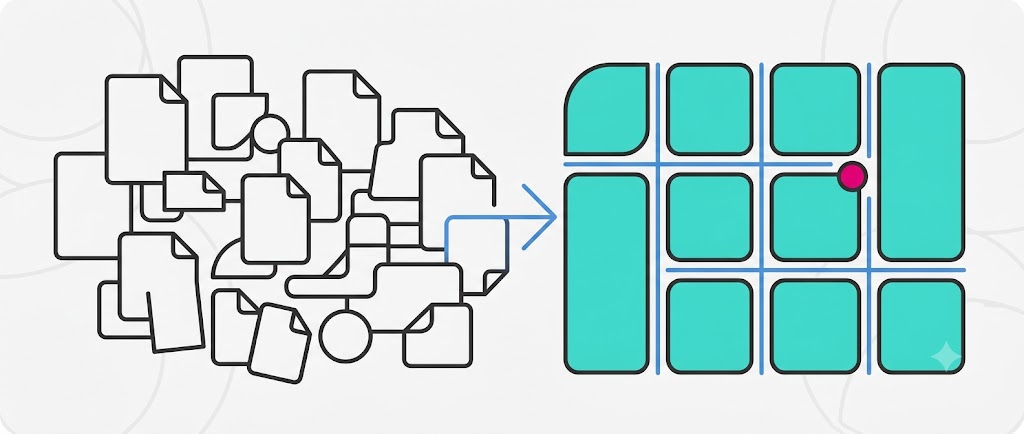
How a Marketing VA Handles Graphic Design Support
It is 10:40 p.m. on a Wednesday and the marketing manager at a mid-sized services business has fourteen tabs open.
Tab one is a Canva file called launch-carousel-FINAL-v6. Tab two is launch-carousel-FINAL-v6-USE-THIS. Tab three is the company website, open because she is eyedropping the brand blue off a hero image — nobody can find the actual hex code, and the last person who knew it left in February. Tab four is a Google Doc containing a screenshot of the logo, which she is about to crop and drop into the carousel, which means the edges will be slightly soft and slightly grey against white, which she will notice on Friday and not before.
Tab seven is a WhatsApp web window where a sales rep is asking, politely, for “just a quick one-pager” before his 9 a.m. meeting. Tab nine is the LinkedIn post that needs a 1200×627 version of the same graphic. Tab eleven is an email from a client asking why last month’s proposal deck used a different font from the one on the website.
None of this is design. All of it is Wednesday night.
This is the shape of the problem almost every growing business hits somewhere between “we should post more” and “we need a design team.” The work is not hard. It is not creative. It is not strategic. It is simply constant, and it lands on whoever is closest to the deadline. And the person closest to the deadline is almost always someone whose actual job was supposed to be something else.
A marketing virtual assistant is the specific fix for that specific problem. Not a replacement for a brand designer. Not an AI tool. A trained person who owns the production layer of your visual output so that the strategy layer stops being done at 10:40 p.m.
Here is exactly how that works.
What “Graphic Design Support” Actually Means — and What It Doesn’t
Let us be precise, because the phrase gets stretched in both directions and both stretches cause disappointment.
A marketing VA handling graphic design support is running production design: building assets from an established brand system, adapting them across formats and channels, maintaining the template library, keeping the asset archive clean, and briefing specialists when something falls outside the system. VAConnect’s marketing VA scope names this explicitly — Canva graphic creation for posts, stories and ads sits alongside blog formatting, scheduling and campaign reporting as part of the standing production load.
What a marketing VA is not is your brand identity designer. They will not invent your visual language, redraw your logo, art-direct a photoshoot, or set your typographic hierarchy from scratch. Those are separate disciplines requiring separate people, and any provider who tells you otherwise is selling you a disappointment on a three-month delay.
The distinction matters because it determines whether the arrangement works. Give a marketing VA a defined brand system and they will multiply your output several times over inside a month. Give them a blank page and a vague instruction to “make it look nice” and you will get exactly what you would get from anyone else handed the same brief: something that is almost right.
The single biggest predictor of whether design support succeeds is not the talent of the person doing it. It is whether a decision-making layer exists above them. Production without direction is just faster drift.
There is a useful diagnostic here from the creative operations world. Viewst’s Steven Khuong suggests asking designers to account, in writing, for how they spent the last fortnight — splitting hours between new concept work, resizing and variant production, and revision back-and-forth, then examining the ratio. His threshold is blunt: if concept time falls under 30% of total hours, the problem is production, not design, and no new hires or new tools will fix a structural issue.
Most businesses reading this do not even have a designer to run that diagnostic on. The ratio is still worth calculating — just run it on yourself.
Why the Design Queue Keeps Growing Faster Than the Team
The instinctive read on a design backlog is that someone is slow. The data says otherwise, and it says it loudly.
Start with volume. Viewst’s account of the shift is stark: a campaign in 2015 might have needed a dozen ad variants; the same campaign today needs hundreds — across channels, placements, markets, audience segments and test variants. That is not a marketing fashion. It is what the distribution platforms now require. Current paid-social benchmarks put it at eight to fifteen or more meaningfully different variations per Meta ad set, and ten to twenty per TikTok campaign, with refresh cycles of two to four weeks on Meta and weekly on TikTok. Another 2026 playbook sets a floor of six UGC videos plus three to four static assets per Meta campaign and notes that creative fatigue now arrives in two to three weeks rather than six.
Do the arithmetic on a modest business running two campaigns, three organic channels and a monthly newsletter. You are not short of one designer. You are short of a production line.
Now add the honest picture from inside creative teams. Superside surveyed more than 300 enterprise creative and marketing leaders for its 2026 research and found that about 86% report their team is at or over capacity, with 51% of projects classified as high priority — a definition of priority that has ceased to mean anything. The same study found roughly four in five creative professionals want to produce bolder work but feel permanently rushed, and 77% say they are weighed down by lower-priority tasks.
That last figure is the whole article in one number. It is not a shortage of skill. It is skilled people doing unskilled work because there is nobody else in the building to do it.
The prior year’s Overcommitted report made the same point from a different angle: 70% of creatives are assigned work below their skill level, and 85% of leaders admit they need to do better at handing that work elsewhere. Wider marketing-operations research found 77% of marketing teams reporting higher project volume year on year, and 45% unable to keep pace with content demand across channels.
Then there is the mundane, grinding centre of it: resizing. A survey by Santa Cruz Software found that 85% of designers struggle with their resizing process, and 22% called it extremely frustrating. The same research showed nearly nine in ten designers typically produce at least four graphics for a single project, and a third produce at least seven. Notably, 51% of designers hand the resizing task to someone else — which is only an option if a someone else exists.
For most South African SMEs, that someone else does not exist. Which is why the queue never clears, and why the marketing manager is still awake at 10:40 p.m.
What the Bottleneck Actually Costs
Three costs, in ascending order of how much they hurt.
Speed. Late assets mean late campaigns, and late campaigns miss the window that justified them. As Viewst puts it with useful bluntness, a Black Friday creative that ships on 28 November is not really a Black Friday creative. The seasonal calendar does not negotiate.
Testing capacity. If you can produce ten variants a week, you cannot run a test with a sample size that means anything. You end up making six weeks of budget decisions on the basis of a hunch dressed up as data. Broader creative-ops analysis found teams weighed down by administrative work seeing productivity drop by as much as 40% — and framed the underlying issue as an information-architecture failure rather than a headcount one.
Brand consistency. This is the expensive one, and it is expensive because it accumulates invisibly. Small compromises made under deadline pressure — the font that is almost right, the logo not quite in its safe zone, the CTA colour that is nearly on-brand — compound across hundreds of assets until, in Viewst’s phrase, “almost right” quietly becomes the brand.
The commercial cost of that drift is measurable. The most rigorous primary work here remains Lucidpress’s two-phase research, which surveyed 200-plus organisations in 2016 and 400-plus brand management experts in 2019, establishing an average revenue increase from consistent brand presentation of 10–20%, with an upper bound of 33%. The mechanism is unglamorous and entirely believable: consistent brands need fewer touchpoints to convert, sustain premium pricing, and generate more lifetime value from existing customers.
Set against that, the enforcement gap is remarkable. Across the 2026 roundups, the same finding recurs: around 95% of organisations have brand guidelines, but only about 30% use them regularly.
Ninety-five percent of businesses have written down how their brand should look. Thirty percent actually apply it. The gap between those two numbers is not a discipline problem — it is an unstaffed production layer.
Guidelines do not enforce themselves. Someone has to open the file, check the hex code, use the approved logo variant, and export at the right dimensions — every single time, on every single asset, including the ones made at 10:40 p.m. That someone is the job.
The Seven Workflows a Marketing VA Actually Runs
This is the practical core. Here is what the work looks like when it is properly structured.
1. Building and Maintaining the Template System
The first month is almost never about producing assets. It is about building the system that makes assets cheap.
Your VA audits what exists — every stray Canva file, every version of the logo, every accidental font — and consolidates it into a working brand kit: locked colour palette with actual hex codes, approved typefaces, logo variants for light and dark backgrounds with defined clear space, and master templates for each recurring format.
The templates are the leverage. Once a LinkedIn carousel template exists, producing next week’s carousel is a twenty-minute task rather than a two-hour one. Once the quote-card template exists, the sales team can be given a shared folder instead of a favour. The upfront investment is real, and it pays back in week three.
2. Producing the Recurring Social Calendar
This is the visible output: feed posts, stories, carousels, quote cards, event graphics, launch announcements. At typical 2026 cadences — roughly three to five Instagram feed posts a week, two to five on LinkedIn, one to two Facebook posts a day for active pages — a business posting seriously across three channels needs somewhere between forty and eighty assets a month before a single campaign starts.
Your VA works from the content calendar, produces to the template system, and delivers into a shared folder or straight into the scheduler. You approve; you do not build.
3. Resizing, Versioning and Format Adaptation
The unglamorous majority of the workload, and the reason the whole arrangement pays for itself.
One approved hero asset becomes: 1080×1080 for the feed, 1080×1920 for stories and Reels covers, 1200×627 for LinkedIn, the display sizes for the ad set, a web banner, an email header, and a print-safe PDF for the trade stand. That is eight exports from one concept, each requiring a real decision about crop, text placement and legibility at small sizes.
This is precisely the layer that designers resent and clients undervalue, and it is precisely the layer where a trained VA delivers full value at a fraction of specialist cost.
4. Presentation, Proposal and Document Design
Decks are where brand consistency dies quietest. Proposals get built under time pressure by whoever owns the deal, and they go to the people whose opinion matters most.
A marketing VA maintains a master deck template, formats new decks from supplied content, rebuilds charts to brand specification, and keeps a library of reusable slides — team, credentials, case studies, pricing tables — so a proposal becomes assembly rather than construction. The same applies to one-pagers, case studies, rate cards and reports.
5. Email, Web and Campaign Assets
Newsletter headers, feature graphics, CTA buttons, landing page hero images, blog featured images and thumbnails. Your VA builds these to spec, tests how they render on mobile, and confirms that the image actually loads in the email client rather than appearing as a grey box in Outlook.
VAConnect’s marketing VAs work across the stack you already use rather than one you have to buy — the published tool list runs Canva, WordPress, Webflow, Mailchimp, ActiveCampaign, Klaviyo, Buffer, Hootsuite, Later, Google Analytics, Semrush, Ahrefs, basic Figma, Notion, Asana and HubSpot.
6. Asset Library and File Hygiene
Deeply boring; enormously valuable. A single source of truth: current logos in every format, approved photography, brand fonts, master templates, and a naming convention that means the file you need on a Thursday afternoon is findable in under a minute.
The alternative is the state most businesses are actually in — assets scattered across WhatsApp, three people’s Downloads folders, an old agency’s Dropbox that nobody has the password for, and a Google Doc containing a screenshot of the logo.
7. Briefing the Specialists
When something genuinely requires a designer — a rebrand, a complex illustration, a packaging job — your VA writes the brief, supplies the reference material and brand assets, manages the revision rounds, consolidates scattered feedback into one clear instruction, and chases delivery.
This is explicitly part of the published scope: VAConnect’s marketing VA handles blog coordination, newsletter drafts, graphic briefs for designers, and content calendar management. Consolidated feedback alone is worth the arrangement. Revision cycles balloon primarily because five stakeholders send five contradictory comments through three channels and the designer is left to guess.
The Human in the Loop: Why AI Generates a Hundred Assets and Ships Zero
The obvious objection in 2026 is that this is a solved problem. Generate the assets. Why staff a production layer that a model can run?
Because the model produces images. It does not produce approved, on-brand, legally clean, correctly sized, contextually appropriate assets, and the gap between those two things is where all the work lives.
Start with the technical ceiling. Text rendering — which matters enormously, since most marketing graphics contain words — remains the persistent failure. The STRICT benchmark found that text rendering collapses beyond roughly 200 characters across all models, with practitioners advising that generated in-image text stay under about 25 characters. Even the strongest current model has a documented degradation curve: accuracy holds well for one to four words, weakens past a dozen, and becomes unreliable beyond around 60 characters. Brand fidelity is a separate and harder problem — practitioner guidance catalogues inconsistent brand colours, typography and lighting across sets, weak compositional reasoning on logos and small objects, and copyright and licensing exposure without asset traceability.
Superside — a company with every commercial incentive to be optimistic about AI creative — describes the actual experience honestly. A designer spends an afternoon generating options with solid prompts and dialled-in references, and maybe five outputs are usable, and even those need several tweaks before they look like they belong to the brand. Their own survey found 39% of leaders worried about AI output quality, 33% concerned about legal or IP risk, and 32% citing lack of training.
Then there is the audience, which turns out to have a strong opinion.
A June 2026 Harris Poll run with the 4As and Infillion found that 78% of consumers say AI makes advertising feel less authentic, 73% are less likely to trust an ad they suspect was AI-made, and 63% are less likely to buy from a brand using AI-generated ads. That last figure is stated purchase intent, not aesthetic preference. Gartner’s 2026 consumer research landed in the same territory, with half of US consumers saying they would prefer to buy from brands that do not use generative AI in customer-facing content. Agency research from Fractl tracked the shift over two years: the share saying heavy AI use would reduce trust in a favourite brand rose from 20% in 2025 to 40% in 2026.
Even the mild version is unflattering. Klaviyo’s survey of 8,000 consumers across eight countries found only 7% say visible AI-generated marketing makes them trust a brand more, against 31% who say it makes them trust it less.
The academic picture is more careful but points the same way. A PRISMA systematic review published in the American Impact Review in March 2026 screened 59 records and assessed 35 studies published between 2020 and 2026, mapping perceived authenticity as a central mechanism in consumer trust responses to AI-generated marketing content.
Consumers are not rejecting the tool. They are rejecting the absence of a person. What reads as inauthentic is not that AI touched the asset — it is that nobody afterwards did.
The practical conclusion is not “avoid AI.” It is that AI is an excellent instrument and a poor operator. A trained marketing VA generating background elements, removing image backgrounds, upscaling assets and drafting variations — then applying the brand kit, correcting the typography, checking the logo clear space, and deciding which five of the hundred outputs are actually usable — produces materially better work than either the person or the tool alone.
Automation is good at volume. It is bad at judgement. Design production is judgement applied to volume.
The South African Advantage
If the production layer is a person, the next question is where that person sits. For UK, European and East Coast US businesses, the South African case is unusually strong — and it is strong for reasons specific to design work.
Timezone: Same-Day Revision Rounds
South Africa sits at GMT+2, which means overlapping working hours with the UK, Europe and the US East Coast rather than asynchronous guesswork. There is no daylight-saving drift on the South African side: the gap to London narrows to one hour in BST and widens to two in winter, and that is the extent of the variation.
For design work specifically, this is close to decisive. Design is a revision discipline. A round trip is look at it, comment, change it, look again — and every one of those cycles either happens inside a working day or costs you a day. Compare the alternative: the Philippines at UTC+8 sits twelve to thirteen hours behind US Eastern time, requiring asynchronous working or night shifts. Three revision rounds on a launch graphic is an afternoon under one arrangement and most of a week under the other.
There is also the shift-extension effect, which clients notice within a fortnight. Assign the deck at 5 p.m. London time; it is 7 p.m. in Johannesburg but the brief was picked up before the day ended, and the first draft is waiting at 8:30 the next morning.
English, Register and Reading the Room
Design production is more language-dependent than it looks. Someone is writing the headline that fits the space, shortening the CTA to eleven characters, deciding whether “Book now” or “Get started” reads better at 320 pixels, and catching that the caption on the carousel says “practise” where it should say “practice.”
South Africa scores 602 on the EF English Proficiency Index 2025 — in the “Very High” band, ranked 13th globally and first in Africa, ahead of the Philippines and every Latin American country. More usefully for British and European clients, South African English sits natively in the British orthographic tradition. There is no conversion layer, no “color” appearing in a UK-facing brochure.
Cultural register matters just as much. British and European marketing communication runs on understatement; American-inflected exclamation reads as trying too hard. That is a judgement call made dozens of times a week on captions, headlines and CTAs, and it is far easier to get right from a market that shares the reference points than from one that has learnt them.
Design-Tool Fluency and the Talent Pipeline
South Africa has a genuine creative-services depth that predates the virtual assistant industry — a large advertising and agency sector in Johannesburg and Cape Town, established design education, and a graduate pipeline entering a tough domestic labour market. The result is positive selection: people with real portfolios and real agency exposure competing for structured remote roles.
VAConnect’s marketing VAs are sourced through a proprietary talent portal where candidates are skills-tested, background-checked and culturally assessed before they reach a shortlist, then upskilled through VAVarsity — the internal training platform every VA passes through before touching client systems.
The distinction that matters here is between tool access and design judgement. Canva has, by any measure, democratised tool access — the platform passed 260 million monthly active users and a $42 billion valuation, with roughly 200 designs created every second. When everyone has the same 4.5 million templates, the template stops being the advantage. What remains scarce is someone who knows which template to reject.
Cost Versus Quality
The honest framing is arbitrage, not discount.
Domestic South African design rates run roughly R150–R200 an hour at entry level, R250–R475 mid-level, and R520–R1,500-plus for senior or agency work, against an average full-time graphic designer salary of about R12,548 a month. Internationally, experienced South African remote professionals typically land in the $6–$10 per hour band, with monthly admin engagements at roughly $1,000–$1,500 — a real premium over the cheapest available markets, and roughly 50 to 70% below equivalent UK or US in-house cost. VAConnect’s marketing VA placements start from $1,088 per month.
Retention is the quality signal that matters most and gets discussed least. Philippine BPO attrition runs 30 to 45%, while South Africa’s global business services sector grew from 65,000 to 150,000 workers in five years with notably stronger retention. In design support, that number is not an HR statistic. A production VA’s value is almost entirely accumulated context — which client hates the diagonal crop, which product photo is approved and which is the old packaging, which font the CEO vetoed in March. Losing that person twice a year means never getting past week four.
Cheap production is the most expensive thing you can buy. A slightly-wrong logo on eight hundred assets costs more than the difference in rate ever saved you.
Managed, Not Matched: Why the Supervision Layer Is the Product
Here is the part that separates a working arrangement from a recurring disappointment.
Hiring a capable person is roughly a third of the problem. The other two-thirds are: who trains them, who notices when quality slips, who covers when they are ill the week of your launch, and who fixes it when the match is simply wrong.
On a marketplace, the answer to all four is you. That model monetises churn — there is nobody whose job is to notice a fraying match and intervene before the relationship dies. The managed model exists precisely to close that gap. VAConnect has run it since Karen van Zyl rebranded Lime Tree Consulting into a managed virtual assistant business in 2014, putting an accountability layer between client and talent that freelance platforms decline to provide.
What that looks like in practice: founded in 2008, 250,000-plus hours delivered, a support team of 35-plus, 98% client retention, a 4.8 Clutch rating, six VA specialities and four proprietary internal platforms, plus a replacement guarantee at no additional cost if the VA is not performing to the agreed standard. Every placement includes managed quality, backup cover, SOP creation for handover, and priority stand-in availability, and matching is done by hand — a bespoke discovery process rather than an algorithm or a shortlist of twenty.
The outcomes clients report cluster around consistency rather than brilliance. A Dubai-based fintech founder reports LinkedIn growth from 11,000 to 28,000 followers following a VA-led social strategy; a digital agency co-founder reports campaign delivery rate up 95%, with excellent project management throughout.
Note what neither of them said. Nobody said the assets were more beautiful. They said the assets shipped.
The First 90 Days
Days 1–30 — Capture. Discovery, matching and onboarding. Your VA audits existing assets, builds the brand kit, consolidates the file chaos into one library, and constructs the first three or four master templates. Expect meaningful output inside week one, but expect it to be organisational rather than creative. Most VAConnect placements fill within two to three weeks.
Days 31–60 — Stabilise. The recurring calendar moves across. Your VA is producing the weekly social assets, handling resizing and format adaptation, and formatting decks on request. Revision rounds are still frequent because the taste calibration is still forming. This is normal and it is temporary.
Days 61–90 — Build. The template library has broadened, revision rounds have dropped sharply, and the VA has started anticipating — flagging that the campaign will need a story version, noticing that the seasonal assets need refreshing, catching the outdated pricing on slide eleven.
The ninety-day test is simple: can a colleague request a branded graphic without asking you, and receive something correct, without you seeing it first? If yes, you have bought back the evening.
The Competitive Gap Is Wider Than It Looks
What is genuinely striking, reading across the 2026 data, is how large the gap has become between businesses that staffed the production layer and those that did not — and how invisible that gap is from inside the second group.
From inside, it feels like being slightly behind. Slightly fewer posts. Slightly later campaigns. A deck that is slightly off-brand. Each individual instance is defensible; none of them feels like a crisis.
From outside, it compounds. The competitor testing fifteen creative variants against your three is not smarter — they simply have someone to build them. The competitor whose brand looks identical across nine channels is not more disciplined — they have someone whose job is enforcing the guidelines that 95% of businesses write and only 30% apply. And the revenue difference attached to that consistency, per the most rigorous primary research available, sits at 10–20% on average, reaching 33% for the most disciplined operators.
The businesses on the right side of that gap are rarely the ones with the biggest budgets. They are the ones who worked out, earlier than everyone else, that design production is a staffing problem wearing the costume of a creative problem — and hired accordingly.
The Canva tab at 10:40 p.m. is not a sign that you need to get better at Canva.
The Comparison
| DIY Coordination | Generic Freelancers | VAConnect Marketing VA | |
|---|---|---|---|
| Who builds the assets | You, at night | Whoever is available that week | One dedicated, trained person |
| Availability | Whatever is left after the real job | Between their other clients | Your agreed hours, consistently |
| Timezone overlap (UK/EU) | N/A | Varies; often minimal | GMT+2 — near-full working-day overlap, no DST drift |
| Revision round time | Whenever you next sit down | 24–72 hours per round | Same working day |
| Brand kit ownership | Nobody | Nobody | Built, maintained and enforced by the VA |
| Template system | Ad hoc files, versioned by filename | Rebuilt per engagement | Master library, growing over time |
| Resizing and versioning | Manual, skipped when rushed | Charged per asset | Standing part of scope |
| Accumulated brand context | Held in your head | Lost at engagement end | Compounds month over month |
| File and asset hygiene | Scattered across devices and chats | Not their responsibility | Single source of truth, maintained |
| Specialist briefing | You write the brief | You write the brief | VA writes, chases and consolidates feedback |
| AI tooling | Prompt-and-hope | Varies wildly, undisclosed | Used as an instrument under human judgement |
| Quality supervision | None | None | Account management, check-ins, performance reviews |
| Cover during absence | Work stops | Work stops | Backup cover and priority stand-in included |
| If the match is wrong | N/A | Restart the search yourself | Replaced at no cost, transition managed |
| Training and upskilling | Your time | Their problem, unverified | VAVarsity before touching your systems |
| Retention | Until you burn out | Typically weeks to months | 98% client retention |
| Realistic monthly cost | “Free” — plus your evenings and delayed strategy | Per-asset, unpredictable, escalates with volume | From $1,088/month, fixed and managed |
Ready to stop building carousels at 10:40 p.m.? A VAConnect Marketing VA takes the production layer off your desk within two to three weeks — hand-matched, VAVarsity-trained and fully managed. Book a 30-minute discovery call or explore the Marketing VA service.
Grow your team, with our team.