How a Sales VA Handles Lead Generation
It is 21:40 on a Wednesday, and the founder of a twelve-person B2B services firm is doing lead generation.
Here is what that actually means. She has a Sales Navigator tab open with 340 saved leads she has not touched since March. She has a spreadsheet called outreach-Q3-v2.xlsx where columns G through K are empty, because that was the afternoon the client escalation happened and she never came back to it. She has a sequence in her sending tool that stopped mid-cadence eleven days ago, and she genuinely cannot remember whether she paused it or whether something broke. And she has an inbound enquiry that landed at 14:12 today from a company that looks like a textbook fit, which she will reply to tomorrow morning — by which point it will be nineteen hours old.
She knows how to sell. She has closed every deal the business has. She is not confused about her ideal customer, her pricing, or her pitch.
What she does not have is anybody whose entire job is to make sure the top of the funnel keeps moving on the days when everything else catches fire. Which is most days.
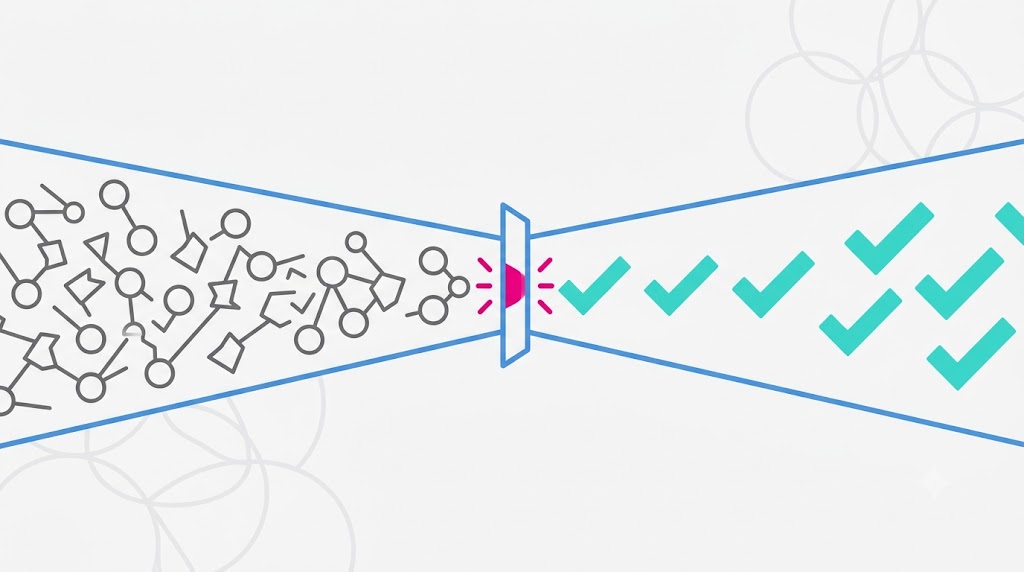
That is the gap a sales virtual assistant fills. Not strategy. Not closing. The unglamorous, relentless, easy-to-postpone work that determines whether there are conversations to close in six weeks’ time. And once you look at what the 2026 data says about where sales time actually goes and how fast prospect data rots, the size of the gap between businesses that have solved this and businesses that have not is genuinely startling.
Lead Generation Is a Capacity Problem Wearing the Costume of a Discipline Problem
Almost everybody who is bad at outbound thinks they are bad at outbound because they lack discipline. The numbers suggest otherwise.
Salesforce’s State of Sales research has found for several cycles running that sales reps spend roughly 28 to 30 percent of their time on actual selling — calls, demos, negotiations. The other 70 percent disappears into CRM updates, internal meetings, manual research, proposal assembly and inbox management. SPOTIO’s 2026 State of Field Sales survey puts B2B reps at 33 percent selling time, with around a quarter of the working week going to administrative work: roughly ten hours per rep, per week, not in front of a buyer. On a ten-person team that is over 5,000 hours a year of lost selling capacity.
And that is people whose entire job title is sales. A founder doing her own prospecting is fitting the same work into whatever survives after delivery, hiring, finance and the client who emails at 22:00.
The consequence shows up downstream. Industry analysis for 2025 found that 78 percent of sellers missed quota, up from 69 percent the year before. Those are not two separate facts. They are the same fact measured at different ends of the pipeline.
Reps spend under a third of their week selling — and 78% missed quota in 2025, up from 69% the year before. Those are not two problems. They are one problem, measured twice.
The structural reading matters, because it changes the fix. If lead generation is failing because of insufficient willpower, the answer is a better morning routine and a stricter calendar block. If it is failing because there is no dedicated capacity assigned to it, the answer is dedicated capacity. Every business that has fixed this has fixed it the second way.
What Breaks First Is Never the Messaging. It Is the Data.
Ask a struggling outbound operation what is wrong and you will hear about subject lines. Ask the data and you get a different answer.
HubSpot’s long-running Database Decay Simulation, built on MarketingSherpa’s research, puts monthly B2B contact decay at about 2.1 percent, compounding to roughly 22.5 percent a year. ZeroBounce’s 2026 Email List Decay Report, drawn from processing more than eleven billion verified addresses, found 23 percent of addresses in a typical list going bad annually — down from 28 percent in 2024, but still close to a quarter. Only 62 percent were valid on first pass.
SMARTe’s 2026 prospecting report, based on ongoing analysis of a 290-million-record contact database tracked at 30-day intervals, makes it concrete. Export 10,000 contacts today, do nothing with them for twelve months, and roughly 3,100 will have a wrong job title or company, 3,100 will have an email that bounces, and 1,800 will have a phone number that has been reassigned or disconnected.
Worse, the decay is not evenly spread. It clusters in exactly the segments that matter most: high-growth companies with constant role changes, recently funded businesses in the middle of reorganising, and senior titles — the people most likely to be promoted or poached. The contacts with the highest deal value rot fastest.
Then there is what bad data does to your ability to send anything at all. Validity’s deliverability benchmarking puts global average inbox placement at around 84 percent, meaning roughly one in six legitimate cold emails never reaches an inbox even under normal conditions. Google’s bulk sender requirements, in full enforcement since the 2024 rollout and tightened again in late 2025, demand a spam complaint rate below 0.10 percent; at 0.30 percent, Gmail delivery stops. Practitioner benchmarks treat a bounce rate above 5 percent as a failing data source and above 10 percent as a reason to halt sending entirely, because you are actively training filters to distrust your domain.
Analysis from ZoomInfo and Everstage found reps spending 27.3 percent of their time working with inaccurate contact data — around 546 hours a year each, dialling wrong numbers and emailing people who left fourteen months ago.
This is the single most useful thing to understand about lead generation in 2026: the campaign that “did not work” usually failed at the list, not the copy. And list maintenance is precisely the kind of patient, repetitive, verifiable work that a founder will never get to and a trained assistant will do every single week.
The Seven Workflows a Sales VA Actually Owns
“Lead generation support” is vague enough to be meaningless, so here is the concrete version. VAConnect’s sales VA scope runs across seven distinct workflows, and they are sequential — each one feeds the next.
1. ICP definition and list building
The VA does not invent your ideal customer profile. You define it, and they operationalise it: three to five non-negotiable criteria (industry, size, geography, tech stack, trigger conditions), scored consistently across every prospect so that anybody below the threshold never enters a sequence. Then they build. Sales Navigator, industry associations, event attendee lists, funding announcements, your own closed-lost pile.
The discipline here is size. Instantly’s 2026 benchmarks found campaigns targeting fewer than 50 recipients hitting a 5.8 percent reply rate, while large-list campaigns dropped to 2.1 percent. Nearly triple the performance, purely from being more selective. A VA who builds tight, well-qualified lists of 40 is outperforming an automated tool exporting 4,000.
2. Verification and enrichment
Every record verified before it enters a sequence. Real-time verification for anything going into active outreach, a 30-day refresh for tier-one accounts in live pipeline, a 90-day re-verification for nurture segments, immediate suppression on any hard bounce or out-of-office with no return date.
This is the least interesting hour of the week and the one with the highest return. It is also the hour that gets skipped by everybody doing this around their real job.
3. Signal monitoring
Static lists are the old model. Signal-based outreach — contacting prospects after a funding round, a leadership change, a hiring surge, a tech stack shift — has been measured at around 18 percent response rates against 3.4 percent for generic cold email. Newly appointed executives spend a large share of their budget in their first hundred days, and the first seller to reach out after a trigger event is several times more likely to win.
Signals require somebody watching. Daily. That is a job, and it is a job a sales VA can do while you are in a delivery meeting.
4. Sequence execution across channels
Cold email, LinkedIn, phone, occasionally video. Modern cadences average around 53 days with 15 or more multi-channel touches, and connect rates have collapsed from the 15-20 percent of a few years ago to somewhere between 3 and 10 percent, with roughly 21 attempts now needed per contact where 17 used to do.
The VA runs the cadence, drafts within your voice and templates, personalises the opening line with something actually specific, and — critically — keeps the sending infrastructure healthy. Mailbox rotation, warm-up, volume discipline, monitoring Postmaster.
5. Speed-to-lead on inbound
The oldest finding in sales development is still the most ignored one. Responding to a new lead within five minutes increases the likelihood of engagement roughly ninefold compared with waiting; leads contacted inside five minutes have been measured as up to 21 times more likely to qualify than those contacted after thirty. XANT’s research puts 35 to 50 percent of sales with the vendor who responds first.
A form fill that arrives at 14:12 and gets answered at 09:00 the next morning is not a lead any more. It is a competitor’s lead. A VA covering your working day closes that window.
6. Follow-up discipline
Around 80 percent of sales require five or more follow-ups. Roughly 44 percent of salespeople give up after one attempt. Only about 2 percent of sales close on first contact.
There is no cleverness in this section. Somebody has to send the fourth email. It is boring, it is where the revenue is, and it is the first thing to fall off a founder’s list.
7. CRM hygiene, reporting and the handover
Deal stages updated the day they change. Contacts deduplicated. Activity logged at the point of the activity rather than reconstructed on Friday afternoon. Weekly pipeline reporting with conversion rates by source, by sequence, by segment — so the next quarter’s targeting is a decision rather than a guess.
And when a prospect replies positively, a clean handover: what triggered the outreach, what they confirmed, who else is involved, what the timeline looks like. Most teams obsess over reply rate and then quietly lose half the booked meetings between the positive reply and the held call.
The campaign that “didn’t work” almost never failed at the copy. It failed at the list, at the fourth follow-up, or in the nineteen hours between a form fill and a reply.
The Human in the Loop: Why Autonomous AI Outbound Keeps Burning Domains
The obvious objection in 2026 is that all seven of those workflows sound automatable. An AI SDR does list building, personalisation, sequencing and reply triage, and it costs a fraction of a person.
The 2026 evidence is more interesting than either the vendors or the sceptics would like.
Start with the fairest available comparison. Digital Applied’s April 2026 analysis paired 100,000 cold emails — 50,000 AI-generated, 50,000 human-written — matched on persona, firmographics, sequence stage and sender-domain age. AI reply rate came in at 4.1 percent against 5.2 percent for humans. Meetings booked: 0.7 percent versus 1.1 percent. That copy gap is real but modest, and closing.
The deliverability gap is not closing. It is widening. Spam-flag rate in that same dataset was 8 percent for AI sends against 3 percent for human ones. Separate 2026 data from Smartlead and Instantly showed a median 38-point drop in sender reputation within 90 days of scaling agentic send volume, with the cause identified as pattern recognition by Microsoft and Google detecting template homogeneity at scale. An unwarmed domain sending at AI-SDR volume can see inbox placement fall below 30 percent within two to three weeks.
Then there is accuracy. A 2026 review of AiSDR reported that between 12 and 18 percent of generated emails contained at least one factually incorrect company-specific claim; an independent post-mortem against a competing agent put the figure above 20 percent on a controlled test set. Operators on G2 and Reddit describe receiving outreach from their own agents addressed to former employees, referencing product lines sunset two quarters earlier, or congratulating them on funding rounds that never happened. At 5,000 sends a day, a 12 percent hallucination rate is 600 confidently wrong emails daily, each one a potential screenshot.
None of this means the tooling is useless. Salesforce’s 2026 research found that 54 percent of sellers have already used AI agents and that sellers using them expect a 34 percent reduction in research time and a 36 percent reduction in email drafting time. Those are real gains. An Outreach survey of 500 revenue professionals found 45 percent running a hybrid model with AI assisting human SDRs, 22 percent having replaced SDRs with agents entirely, and 23 percent not using AI for prospecting at all.
The 45 percent are the ones the data favours. What breaks in the fully autonomous model is not the writing — it is the judgement. An autonomous agent optimises against the metric it was given, and the easiest thing it can do is send more email. Volume looks like effort on a dashboard. A human SDR who has a bad week rewrites the subject line, tightens the targeting and kills the sequence that is not converting. An agent scales the failure.
Somebody has to notice that the prospect who replied “not now, ask me in March” is a March task and not an unsubscribe. Somebody has to notice that three replies this week have all pushed back on the same pricing assumption. Somebody has to notice that placement collapsed on Tuesday and stop sending before Friday.
Automation is excellent at volume and poor at judgement. Lead generation is judgement applied to volume — which is precisely the combination that keeps breaking unsupervised systems.
A trained person operating good software beats both the person without software and the software without the person. That is the whole argument, and the deliverability data is the receipt.
The South African Advantage
VAConnect places South African virtual assistants with businesses locally and around the world, and for sales work specifically the case is unusually strong. Four reasons.
Timezone: the overlap that makes same-day work possible
South Africa runs on GMT+2 with no daylight saving, which means the working day does not drift twice a year. For a South African business, that is simply your own clock. For a UK client, South Africa sits one to two hours ahead — a full six to eight hours of live overlap every working day. European clients get near-total coverage. A shift starting at 14:00 SAST covers the US East Coast morning without asking anybody to work nights.
Compare that with the Philippines at GMT+8, seven to eight hours ahead of the UK, where real-time collaboration requires either Filipino night shifts or UK dawn starts. In lead generation this is not a convenience issue, it is a conversion issue. A prospect who replies at 11:00 gets an answer at 11:20, not tomorrow. The five-minute response window is a fantasy across an eight-hour gap.
There is also a quieter benefit. Because South African VAs start earlier than their UK clients, work assigned at 17:00 London time is frequently done before the client opens their laptop. The list built overnight. The sequence live at 09:00.
English, and the register underneath it
South Africa scores 602 on the EF English Proficiency Index — 13th globally, first in Africa, comfortably in the “very high” band. The Philippines ranks 22nd, India below that.
But proficiency scores understate the real advantage, which is register. Sales writing lives or dies on tone. A cold email that is a fraction too enthusiastic, a follow-up that pushes half a notch too hard, a LinkedIn message with a phrase that lands as American in a British inbox — these do not read as foreign, they read as spam. South African business English sits naturally between British and American convention, and South Africans are raised on UK and US media, sport and popular culture. BPESA’s research consistently identifies this cultural alignment as the reason UK buyers require less training investment here than in Asian markets.
For sales VAs, VAConnect matches candidates for written communication quality specifically, because the output is client-facing by definition.
Measured quality, and the retention number that actually matters
BPESA and InvestSA data credit South African delivery with roughly an 18 percent customer-experience quality advantage over competing offshore markets, alongside higher first-contact resolution. Ryan Strategic Advisory’s 2024 survey of 750 enterprise CX buyers placed South Africa tied second globally; its 2025 survey named the country the first choice for US enterprise buyers.
The metric that matters most for a sales function, though, is attrition. South African contact centres report annual attrition of 10 to 18 percent against 30 to 40 percent in the Philippines and 30 to 35 percent in India.
This is decisive, and here is why. A sales VA’s value is almost entirely accumulated context — which objection your market actually raises, which subject line worked in February, which prospect said “ask me after our financial year end”, which segment converts and which one wastes six touches. That context takes months to build and vanishes instantly when somebody leaves. Set it against in-house SDR economics: The Bridge Group’s benchmarking puts average ramp at around 3.2 months, average tenure at 14 to 18 months, and annual turnover between 34 and 40 percent. Fully loaded cost estimates for a single US-based SDR ran to roughly $154,000 in 2026 analyses, with replacement costing $30,000 to $50,000 each time. You get roughly eight to nine productive months after ramp before you are hiring again.
Meanwhile, South Africa’s GBS sector has grown from USD 1.04 billion in export revenue in 2019 to USD 2.91 billion in 2024, with the UK generating close to half of new international job creation. The talent pool is deepening, not thinning.
Cost, and the reason “cheap” is the wrong frame
South African delivery runs 55 to 65 percent below equivalent UK, US and Australian in-house hiring, with fully loaded bill rates typically in the $6 to $11 per hour band. VAConnect’s dedicated VA packages start from $1,088 per month; local South African packages start at R12,000 for 40 hours and R20,000 for a half-day equivalent.
The right comparison, though, is not against the cheapest possible freelancer. It is against the cost of the failure modes. A burned sending domain takes months to rebuild, or gets retired and replaced with new registration, new authentication, new warm-up. A list nobody verified produces a 15 percent bounce rate and a compliance rate that gets your primary domain blocked. A hallucinated email to a prospect’s former employer is a reputational cost you cannot invoice.
The cheapest unsupervised person on a marketplace is not a saving on that arithmetic. It is an uninsured bet against your own pipeline.
Managed, Not Matched: Why the Supervision Layer Is the Product
There is an academic finding worth holding here. The largest randomised controlled trial of hybrid working — Nicholas Bloom and colleagues’ study of 1,612 university-graduate employees at Trip.com, published in Nature — found that two days a week at home had no measurable effect on performance, output or promotion, while cutting quit rates by about a third. Bloom’s summary was that hybrid work is “a win-win-win for employee productivity, performance, and retention”.
The nuance that gets dropped in the headlines matters more for this discussion. Bloom has been explicit that critics conflate hybrid with fully remote, and that the fully remote studies skew more negative — which suggests to him that problems with fully remote work arise when it is not managed well.
That is the entire distinction between a marketplace freelancer and a managed VA. Remote work does not fail because it is remote. It fails when nobody is managing it.
VAConnect started in 2008 as Lime Tree Consulting Solutions and rebuilt around the managed model in 2014, before “virtual assistant” was standard vocabulary in the region. Founder Karen van Zyl built the business around systems rather than matching. The mechanics of that: sourcing through VAJobs with skills testing and background checks; VAVarsity, a free internal upskilling platform, before anybody touches a client system; the Atomic Energy wellbeing programme; VAPI, a two-way happiness framework where problems surface early in both directions; an account manager and structured performance reviews; and a replacement guarantee with the transition managed — no fees, no friction. Over 100,000 hours delivered, a support team of 25-plus, and 98 percent client retention.
Sales VAs are recruited against the role rather than against general office experience — a minimum of a year in an inbound or outbound sales role with direct lead engagement, and working familiarity with Salesforce, Outreach, Sales Navigator and enrichment tooling.
The client evidence is consistent on what changes. Mark Ferreira, VP of Sales at NovaSpark Technologies, reported qualified pipeline up 30 percent with his SVA placed 14-plus months, describing an assistant who “fills the CRM, follows up every lead, and keeps the pipeline honest”. Lisa Thornton, founder of Apex Growth Partners, whose SVA is still active after 20 months, put it more bluntly: “The output per rep has genuinely doubled.”
What a Sales VA Should Not Do
Worth stating plainly, because over-delegation is how these arrangements fail.
A sales VA does not set your pricing. Does not negotiate terms. Does not make discounting decisions or commit to delivery timelines. Does not run the closing conversation on a complex deal, and should not be handed a relationship with your largest account because you are busy. They do not own your ICP — they execute against the one you define, and flag when the data suggests it is wrong.
They also do not absolve you of compliance. If you are prospecting into the EU or UK, the lawful basis for your outreach, your suppression list and your privacy notice are yours. South Africa’s POPIA is structurally aligned with GDPR, which makes the working relationship straightforward, but delegating the work is never delegating the accountability.
The First 90 Days
Weeks 1–3 — capture. Discovery on your ICP, your tone, your objection library, your CRM structure. The VA sits in on calls, reads your closed-won and closed-lost, builds a first tight list of 40 to 60 accounts. Expect meaningful output in week one and full ramp between weeks two and four.
Weeks 4–8 — stabilise. Verification cadence running. First sequences live at controlled volume with deliverability monitored daily. Inbound response time under an hour during working hours. CRM cleaned of duplicates and dead records. First weekly pipeline report.
Weeks 9–13 — build. Signal monitoring in place. Sequences iterated on real reply data rather than assumption. Stalled-deal re-engagement running. Documented SOPs so the process survives holidays and handovers.
The day-90 test is simple: can you go on leave for a week without the top of the funnel stopping?
The Gap Is Wider Than It Looks
Here is what is genuinely surprising about the 2026 data, taken together.
The businesses winning at lead generation are not the ones with better copywriters, and they are not — despite the marketing — the ones that replaced their SDRs with agents. They are the ones who put a trained person in charge of the boring layer: the verification, the fourth follow-up, the nineteen-hour inbound gap, the daily check on whether anything is actually reaching an inbox.
Everyone else is running the same three failure modes on repeat. A list that quietly went 22 percent wrong. A cadence that stopped on day eleven. A domain reputation dropping 38 points while a dashboard reports record send volume.
The competitor who fixed this is not smarter. They have not found a channel you do not know about. They just have somebody whose job it is, every day, and the compounding effect of that over four quarters is the entire difference between a pipeline and a spreadsheet.
DIY vs Generic Freelancer or AI Tool vs VAConnect Managed Sales VA
| DIY / Founder-Led Outbound | Generic Freelancer or AI SDR Tool | VAConnect Managed Sales VA | |
|---|---|---|---|
| When the work happens | Evenings, weekends, whenever the day allows | Whenever the freelancer’s other clients allow; agent runs continuously | Dedicated hours inside your working day |
| List building | Sporadic, usually copied from last quarter | Bulk export at volume; quantity over fit | Tight, ICP-scored lists refreshed weekly |
| Data verification | Rarely, and usually after a bounce spike | Assumed handled by the vendor; often is not | Real-time at point of send, tiered refresh cadence |
| Deliverability monitoring | Not until something breaks | The most common failure point; −38pt reputation drops documented | Daily monitoring, volume discipline, mailbox rotation |
| Personalisation quality | Good when it happens; often does not | Pattern-matched in seconds by 2026 buyers | Specific, signal-based, written in your voice |
| Factual accuracy | High | 12–20% of generated emails carry a wrong company-specific claim | Human-verified before send |
| Inbound response time | Hours to next morning | Instant but often wrong-persona | Under an hour in working hours |
| Follow-up discipline | Drops off around touch two | Executes the cadence, misses the nuance in replies | Full cadence, with judgement on replies |
| Signal monitoring | Aspirational | Sometimes, if configured and paid for | Daily, actioned same day |
| CRM hygiene | Reconstructed on Fridays, if at all | Logs activity, not context | Logged at point of activity, with handover context |
| Reporting | Gut feel | Volume metrics that flatter the tool | Conversion by source, sequence and segment |
| Continuity risk | You are the single point of failure | Freelancer churn; agent contract churns at ~90 days | 98% client retention; 10–18% market attrition |
| Ramp and replacement | n/a | Restart from zero each time | Managed replacement, no fees, no friction |
| Timezone | Yours | Frequently 7–8 hours away | GMT+2, no DST drift, full UK/EU overlap |
| Supervision | None | None | Account manager, performance reviews, VAVarsity training |
| Cost profile | Hidden — your selling time | Cheapest headline rate, highest failure cost | From $1,088/month, fully loaded and managed |
If your pipeline depends on somebody remembering to do the boring part on a Wednesday night, it does not depend on a strategy. It depends on capacity you have not hired yet.
Talk to VAConnect about a Sales VA. Book a discovery call →