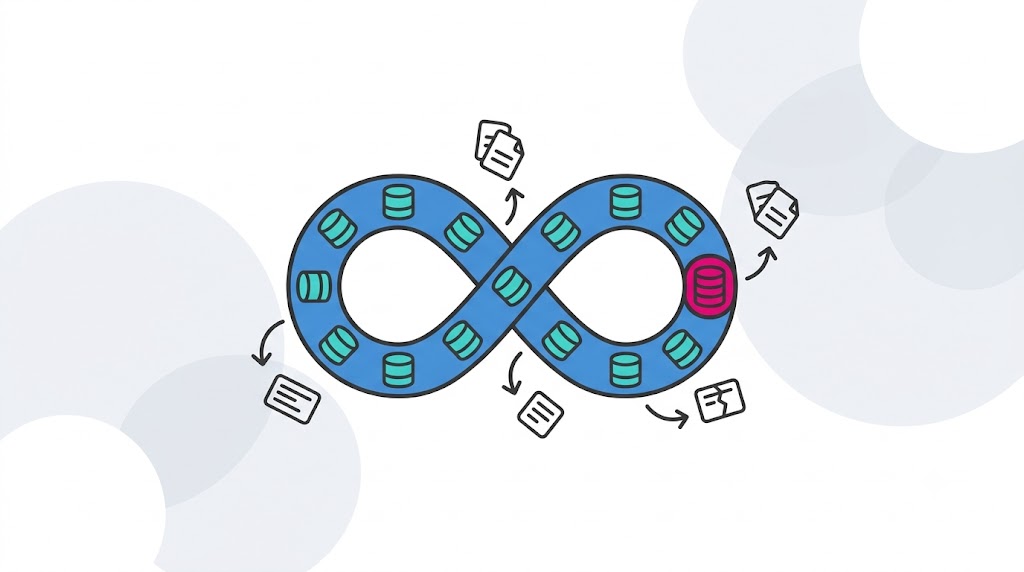
How a Sales VA Handles CRM Hygiene
It is 4:15 p.m. on a Thursday and the pipeline review has gone quiet.
The number on the screen says R4.2 million in open opportunity. The sales manager knows it isn’t R4.2 million. She knows because she recognises three of the deals near the top — one of them belongs to a contact who left the company in February, one has been sitting in “Proposal Sent” since a proposal that was never sent, and one is the same account entered twice under two spellings, counted twice, forecast twice. She doesn’t say this out loud, because the alternative is admitting that the system everyone has been feeding for two years cannot answer a basic question: what is actually going to close?
So the room does what rooms do. Someone opens a spreadsheet. Someone says “let me just check with the rep.” The forecast that gets sent upstairs is a number from the CRM, adjusted by feel, defended with confidence nobody genuinely has.
This is the part that should be uncomfortable: nobody in that room is bad at their job. The reps aren’t lazy. The manager isn’t disorganised. The CRM isn’t the wrong software. The records are wrong because keeping them right is a continuous, unglamorous, daily job that has never been assigned to anybody, and every person who could do it has something more urgent in front of them at all times.
CRM hygiene is the most consequential work in a sales organisation that nobody has been hired to do.
And the gap between businesses that have solved this and businesses still doing it “when there’s time” has become genuinely startling. Not a 10% difference in efficiency. A difference in whether the pipeline is a management tool or a work of fiction.
What CRM Hygiene Actually Means
The phrase sounds like a euphemism for deleting duplicates. It is considerably bigger than that.
CRM hygiene is the ongoing discipline of making sure the record in the system matches reality — accurately, completely, consistently, and right now. In practice, that is at least eight recurring jobs:
- Deduplication. One account, one record. Not “Anderson Logistics,” “Anderson Logistics (Pty) Ltd” and “anderson logistics” as three competing sources of truth.
- Contact verification and enrichment. Is this person still there? Is the title still right? Is the direct dial still connected?
- Stage integrity. Does “Negotiation” mean the same thing for every rep, and does anything in the record justify the stage it sits in?
- Activity logging. Calls, meetings, emails and outcomes attached to the deal, so the history survives the rep who created it.
- Next-step hygiene. Every open opportunity carries a dated next action. Deals without one are not deals; they are hopes.
- Field completeness. Source, industry, deal size, close date, decision-maker — the fields the reporting depends on, filled in the same way each time.
- Decay sweeps. Records that have gone stale, quietly, without anybody touching them.
- Pipeline reconciliation. Deals that should be closed-lost being closed-lost, on purpose, rather than lingering to flatter the forecast.
None of it is difficult. All of it is relentless. That combination — low skill ceiling, zero tolerance for gaps — is exactly the profile of work that gets crowded out by anything with a deadline attached.
Nobody misses their number because they failed to deduplicate an account. They miss it because six months of undeduplicated accounts made the forecast unreadable, and the decisions built on that forecast were wrong.
The Decay Nobody Budgets For
Here is the part most sales leaders have never actually sat down and modelled.
Your CRM does not go stale because people are careless. It goes stale because the outside world moves and the database doesn’t. HubSpot’s widely cited database decay simulation, drawn from MarketingSherpa research, puts B2B contact data decay at roughly 2.1% per month — which compounds to about 22.5% a year. Dun & Bradstreet’s estimate is more aggressive, landing between 30% and 40% annually, and rising in high-mobility sectors like technology, financial services and professional services. Landbase’s field-level analysis pushes the top of the range higher still, because email addresses decay considerably faster than firmographic data.
Take the conservative figure. A quarter of your database is wrong within twelve months, and nobody entered a single incorrect keystroke. The rot is structural.
The driver is job movement. When a contact changes roles, their email, direct dial and title all become invalid on the same day — three data points killed by one LinkedIn update. Research cited by Landbase puts the proportion of business contacts experiencing at least one data change inside twelve months at 70.8%, with job titles changing for around two-thirds of contacts annually. The Bridge Group’s SDR metrics work places average SDR tenure at roughly 1.4 years, which means the people your reps built relationships with in the buyer’s organisation are themselves churning faster than most CRM refresh cycles.
Salesforce’s own research has found that 91% of CRM data is incomplete, stale or duplicated. Validity’s 2025 reporting found that 76% of organisations say less than half the data in their CRM is accurate.
Read that again. Three-quarters of businesses believe the majority of their customer data is wrong — and are still forecasting from it.
The Cost Shows Up Somewhere Else
The reason CRM hygiene never gets funded is that it has no line item. The cost of neglecting it is real, but it appears in categories that look like other problems.
It appears as wasted selling time. Salesforce’s State of Sales research has consistently found reps spending only around 28–30% of their week on actual selling. Forrester’s activity study of more than 3,000 reps found the average rep burning close to two full days a week on administrative work alone. Prospeo’s 2026 compilation puts the direct cost of bad data at roughly 550 hours and about $32,000 per rep per year — time spent researching contacts that should already be correct, re-finding numbers, and reconstructing history that was never logged.
It appears as forecast failure. Deals that should be dead inflate the pipeline. Leadership plans hiring, inventory and cash against a number built on ghosts, and then discovers the gap at the worst possible moment. Analysts have linked CRM data quality directly to forecast accuracy improvements of around 42% when it is handled properly — which is another way of saying that the forecast is currently wrong by a margin that big when it isn’t.
It appears as a sender-reputation problem. Bounced emails from decayed contacts damage domain reputation, which quietly degrades deliverability for every future campaign, including the ones aimed at people whose details are correct.
It appears on the balance sheet, eventually. Gartner’s long-standing estimate puts the average annual cost of poor data quality at $12.9 million per organisation. Validity’s 2025 data suggests companies lose an average of 16 sales opportunities per quarter directly to unreliable CRM records.
Sixteen lost opportunities a quarter is not a hygiene problem. At most mid-market deal sizes, that is a headcount.
And the AI layer everybody is now buying makes this worse, not better. Lead scoring trained on duplicate contacts and dead job titles produces confident recommendations built on noise. The tooling has improved dramatically. The inputs have not.
Why Your Reps Will Never Fix This
The instinct is to solve it with accountability. Add required fields. Run a Friday data-quality report. Tie a portion of commission to CRM compliance. Send the email about “single source of truth.”
It doesn’t work, and the failure is remarkably consistent across decades and platforms.
Gartner has reported CRM project failure rates between 50% and 70%. Forrester put it at 47%. Independent 2025 research from Johnny Grow landed on 55%. Harvard Business Review’s aggregation of a dozen analyst reports found a range of 18% to 69%. What is striking is that the software has improved enormously across that period — better interfaces, deeper integrations, embedded AI — and the failure rate has barely moved. Over 60% of CRM failures are attributed to people and process problems; only around 6–10% stem from the platform itself.
The single most quoted symptom: an estimated 79% of opportunity-related information gathered by sales reps never makes it into the CRM at all.
This isn’t a character flaw. It’s arithmetic. A rep finishes a call at 11:52 with the next one at 12:00. Logging that call properly — outcome, objection, competitor mentioned, next step, dated follow-up, contact detail correction — takes six or seven minutes done well. They have eight. Something has to go, and the thing that goes is always the thing with no immediate consequence.
Multiply that decision by every call, every rep, every day, for two years.
A 2025 study published in the Journal of Information Systems Engineering and Management, analysing 215 firms across industries, found that companies with high CRM process quality achieved measurably better outcomes: 23% higher customer retention over three-year periods, and 18% greater sales force productivity measured by revenue per representative. The same body of work found something more useful for anyone trying to fix this: quality interventions built into the process of data capture produced a 40–60% reduction in defect rates compared with cleaning data up after the fact.
That finding is the whole argument. Periodic cleanups fail because they treat a continuous condition as an occasional project. What works is somebody doing the work continuously, close to the point of entry — which means somebody whose job it is.
What a Sales VA Actually Does With Your CRM
This is where the abstraction ends. A managed sales virtual assistant working on CRM hygiene runs a cadence, not a cleanup. It looks roughly like this.
Daily
- Log and tidy activity from the previous day — call outcomes, meeting notes, email threads attached to the correct opportunity rather than floating in an inbox.
- Verify and correct contact details surfaced by bounces, out-of-office replies and job-change notifications.
- Chase and close the loop on missing next steps: every open deal touched yesterday exits the day with a dated next action.
- Enter and route new inbound leads within minutes rather than the following week, with source attribution captured while it still exists.
Weekly
- Run a duplicate sweep and merge records against agreed rules, preserving the richer history rather than the newer entry.
- Produce a stage-integrity exception report: deals sitting in a stage longer than the agreed threshold, deals with no activity in fourteen days, deals with close dates in the past.
- Prepare the pipeline review pack so the manager walks in with reconciled numbers rather than discovering the problems live.
- Flag decayed contacts for re-verification, prioritising the accounts that matter most rather than working alphabetically.
Monthly
- Enrich priority accounts — new decision-makers, restructures, funding events, acquisitions.
- Audit field completeness against the reporting the business actually uses, and fix the gaps.
- Reconcile closed-lost hygiene: deals formally closed with a reason code, so win-loss analysis becomes possible.
- Deliver a data health summary — record counts, duplicate rate, completeness percentage, decay flags — so the trend is visible instead of anecdotal.
Quarterly
- Full database audit with a sampled accuracy check against live sources.
- Review and update field definitions, stage criteria and naming conventions with sales leadership.
- Retire or archive genuinely dead records rather than carrying them forever.
Notice what is not on that list: strategy, deal ownership, negotiation, judgment about whether a deal is real. The VA does not run the pipeline. The VA makes the pipeline legible so the people running it can trust what they are looking at.
The reps get their time back. That is the visible benefit. The invisible one is bigger: the leadership team stops making decisions from a document that lies to them.
The Human in the Loop
There is an obvious objection here, and it deserves a straight answer: surely this is precisely what AI is for?
Partly. The tooling is genuinely good now. Conversation intelligence platforms transcribe calls and extract fields. Enrichment services refresh contact data automatically. Automated capture writes activity back to deal records without anyone clicking. Used well, this removes a meaningful chunk of the typing.
What it does not remove is judgment — and CRM hygiene is judgment applied at volume.
Consider a documented failure pattern in AI-driven CRM automation: a model processes a call transcript, reads the phrase “John closed the deal,” and updates the opportunity to Closed Won — when the context of the conversation indicated the deal was lost to a competitor named John. That is not a far-fetched edge case. Studies of chatbot behaviour have found hallucination rates as high as 27% in some contexts, with newer systems in certain tests performing worse rather than better. In a CRM, a hallucination doesn’t produce a funny screenshot. It produces a wrong forecast that nobody questions because it came out of the system.
The practitioners running these deployments say the same thing repeatedly: the hidden operational load is what kills AI CRM rollouts. Data cleaning, workflow tuning, hallucination monitoring and human review loops for AI-written activity notes all have to land on someone. Buying the tool does not eliminate the work; it changes its shape from typing to verifying.
Then there is the deduplication problem that automation reliably gets wrong. One account with three company name variations and two domains forces an automated system to assign conflicting priorities to what is actually a single customer. A rules engine cannot know that the Cape Town branch and the Johannesburg head office are the same relationship, or that a contact who moved from a prospect to a customer account should carry their history with them. A trained human who has watched your pipeline for six months knows both instantly.
The most useful framing came from a CRM practitioner writing in early 2026: the point of the technology is to feed context to humans at the right moment, not to replace the humans and hope the output holds. Augmentation works. Substitution produces plausible-looking records that nobody has checked.
A managed sales VA is not an alternative to automation. A managed sales VA is the person who operates the automation, checks what it wrote, catches the “John closed the deal” error before it reaches a board pack, and handles the 20% of cases that no rule covers. That is why the combination outperforms either half on its own — and why teams running the tools without the human keep discovering, two quarters later, that their data is no cleaner than it was before.
The South African Advantage
There is a reason a growing share of UK, European and US businesses solving this problem are solving it with South African talent, and it is not primarily about price.
The Timezone Is the Whole Argument
South Africa runs on GMT+2, with no daylight saving shifts to manage. That places a South African VA one to two hours ahead of the UK, in complete overlap with Western Europe, and reaching into the US East Coast morning. Nine in London is eleven in Cape Town. The entire working day is shared.
For CRM hygiene specifically, this matters more than it does for almost any other delegated function, because the work is reactive. A rep finishes a call and needs the record updated before the next one. A duplicate surfaces mid-pipeline-review and needs merging now. A bounced email on a priority account needs re-verification today, not tomorrow.
Compare that with a Philippines-based alternative at GMT+8 — seven to eight hours ahead of the UK — where every clarification costs a full day of round trip. For work that consists almost entirely of small, fast clarifications, that latency compounds into exactly the backlog you were trying to eliminate.
There is also a quieter advantage: the shift extension. Work assigned at 17:00 in London gets handled while the client sleeps and is sitting reconciled at 08:30. The pipeline review pack is ready before anyone opens their laptop.
English, and the Register Underneath It
South African business English sits naturally between British and American convention, and the accent from the major hubs is neutral and easily understood on both sides of the Atlantic. On the EF English Proficiency Index, South Africa scores well above the global average and ahead of both the Philippines and India, ranking first in Africa.
For CRM work, the language question is subtler than fluency. A VA logging a call note is writing something a sales director will read six months later while deciding whether to walk away from an account. The note has to capture register — whether the buyer was politely stalling or genuinely blocked, whether “we’ll circle back after budget” was a soft no or a real timeline. Someone who has grown up inside the same conventions of understatement and hedging reads that correctly. Someone who hasn’t records a stalled deal as a positive signal, and the forecast inherits the error.
Trained Judgment, Not Just Available Hands
South Africa’s global business services sector grew from roughly USD 1.04 billion in 2019 to an estimated USD 2.91 billion in 2024 — a 180% increase in five years, according to BPESA. The sector now employs around 150,000 people, with UK-origin work accounting for a large share of new job creation. Buyer surveys from Ryan Strategic Advisory have consistently placed South Africa in the top two offshore CX destinations globally.
That maturity matters. It means the available talent pool includes people who have already worked inside Salesforce, HubSpot, Pipedrive and Zoho for Western businesses, who understand pipeline stage conventions, and who do not need six weeks of explanation about what MQL means.
Cost Without the Quality Trade
BPESA’s national value proposition cites cost savings of 55–65% against in-house operations in the UK, US and Australia — a figure that accounts for recruitment, benefits, overhead, management layers and attrition-driven rehiring, not just base salary. Investec’s analysis of the sector puts the range at 60–70% against Australia, the UK and the US.
The trap here is assuming that cost saving and quality are on a slider. In CRM hygiene, they aren’t — because the cheapest possible option is the one that introduces errors you then have to find. A record entered wrong is worse than a record not entered at all, because the second announces itself and the first hides.
Attrition is where this becomes decisive. South African BPO attrition typically runs meaningfully below the rates reported in the largest Asian outsourcing markets. For a function whose entire value is accumulated context — which accounts are actually the same company, which contact is the real decision-maker, which rep systematically over-forecasts — losing the person means losing the knowledge. Replacing a CRM VA every eight months means never getting past the cleanup phase.
Managed, Not Matched
This is the distinction that decides whether any of the above actually happens.
Hiring a freelancer from a marketplace to “clean up the CRM” is a project. It has a start date, an end date, and a person who disappears afterwards. Three months later the decay has undone most of it, because the underlying condition — nobody owns this daily — was never addressed.
VAConnect has been operating on the managed model since 2014, having started life in 2008 as Lime Tree Consulting Solutions under founder Karen van Zyl. The company now runs as Africa’s largest managed virtual assistant agency, with more than 100,000 hours delivered and a support team of 25-plus people standing behind the placed VAs. The practical difference is what sits around the assistant: sourcing and skills testing before shortlist, training through VAVarsity before anyone touches a client system, an account manager, structured performance reviews, backup cover when someone is ill, and a free replacement with a managed transition if the fit isn’t right.
For CRM hygiene in particular, that infrastructure is not a nice extra. The work is only valuable if it is continuous. A model that survives illness, leave and turnover is the difference between a clean pipeline and another cleanup project next March.
VAConnect’s sales support offering is built to function as an extension of an existing sales team rather than a replacement for it — supporting the whole funnel or just the parts that are breaking.
The First 90 Days
Days 1–14 — Capture. The VA learns the system as it currently is: field definitions, stage criteria, naming conventions, who owns what. A baseline audit is produced. Nothing is deleted yet. The output of this phase is an honest number: what percentage of records are duplicated, incomplete or stale.
Days 15–45 — Stabilise. Daily cadence starts immediately, so new records enter clean while the backlog is worked. Deduplication rules are agreed with sales leadership rather than assumed. The first weekly exception report lands, and it is usually uncomfortable.
Days 46–90 — Build. The backlog closes. Enrichment begins on priority accounts. Reporting becomes reliable enough to base decisions on. Stage definitions get tightened based on what the data revealed.
The test at day ninety is simple: can the sales manager open the pipeline report and act on it without opening a spreadsheet to check?
Most placements reach meaningful output inside the first week and full ramp at two to four weeks. Ninety days is the point at which the pipeline stops being an argument.
The Competitive Gap
Here is what should genuinely unsettle a sales leader reading this.
The businesses that have solved CRM hygiene are not slightly better at forecasting. They are operating with a different instrument. Their reps recover the equivalent of hundreds of hours a year that competitors are still spending on re-finding information. Their leadership plans from a number that survives contact with reality. Their AI tooling produces useful recommendations because it is trained on records that describe actual customers. Their win-loss analysis is possible at all, because losses were closed with reasons attached.
The businesses that haven’t are running the same software, paying the same licence fees, and getting a very expensive filing cabinet.
The distance between those two positions was always there. What has changed is how quickly it now compounds, because every automation layer bolted onto a dirty database multiplies the error rather than correcting it. Two years ago, bad CRM data cost you accuracy. Now it corrupts everything built on top of it.
None of this requires a transformation programme. It requires one trained person, working a defined cadence, every working day, in your timezone, who is not also carrying a quota.
That is a solvable staffing problem. Most businesses are still treating it as a discipline problem, which is why they are still losing.
The Comparison
| DIY / In-House Scramble | Generic Freelancer or AI Tool | VAConnect Managed Sales VA | |
|---|---|---|---|
| Who owns CRM hygiene | Nobody formally; reps and managers in gaps | Contractor for the duration of a project | A named person, daily, as their defined role |
| Cadence | Reactive; before board meetings and QBRs | One-off cleanup or scheduled automation | Daily, weekly, monthly, quarterly rhythm |
| Deduplication | Ad hoc, usually when something breaks | Rule-based; merges the wrong record when names differ | Rules agreed with leadership, richer history preserved |
| Contact decay | Discovered via bounces | Bulk enrichment, unverified | Prioritised re-verification on accounts that matter |
| Activity logging | Roughly 79% of opportunity data never captured | Auto-captured, unreviewed | Auto-captured, then checked and corrected |
| Stage integrity | Interpreted differently by every rep | Not addressed | Weekly exception reporting against agreed criteria |
| Forecast reliability | Adjusted by feel | Confidently wrong | Reconciled before the review, not during it |
| AI error catching | No review layer | The error is the output | Human verification before anything reaches a board pack |
| Timezone overlap with UK/EU | N/A | Often 7–8 hours ahead; a day per clarification | GMT+2, full working-day overlap, no DST drift |
| Context retention | Lost when a rep resigns | Lost at project end | Accumulates; low attrition, backup cover in place |
| Cover for leave or illness | Work simply stops | None | Managed backup through the agency |
| If the fit is wrong | Rehire, retrain, restart | Post the brief again | Free replacement with managed transition |
| Training | On the job, inconsistent | Assumed | VAVarsity before touching client systems |
| Cost vs local hire | Full loaded salary plus overhead | Cheapest per hour, highest error cost | 55–65% saving with a supervision layer included |
| What you get in 90 days | Another cleanup scheduled for next quarter | A clean snapshot that decays immediately | A pipeline you can act on without a spreadsheet |
Ready to stop forecasting from fiction? VAConnect’s managed Sales VAs work your hours, inside your CRM, as part of your team — recruited, trained and supported so you never have to manage the manager. Book a discovery call and we’ll scope what your pipeline actually needs.
Sources
- HubSpot Database Decay Simulation (MarketingSherpa data); Dun & Bradstreet B2B data decay estimates; Landbase field-level decay analysis, 2026
- Salesforce, State of Sales research; Forrester sales activity study (3,031 reps); Prospeo, Sales Productivity Statistics, 2026
- Gartner, Forrester, Johnny Grow (2025) and Harvard Business Review aggregation on CRM implementation failure rates
- Journal of Information Systems Engineering and Management, 2025 — empirical study of 215 firms on CRM process quality and data-defect reduction
- Validity, 2025 CRM data accuracy report; Gartner poor-data-quality cost estimates
- Practitioner and industry commentary on AI CRM failure modes, hallucination monitoring and human review loops (SynkrAI, Planet Crust, aheadcrm), 2025–2026
- BPESA National Value Proposition 2025; Grand View Research; Investec sector analysis; EF English Proficiency Index; Ryan Strategic Advisory buyer surveys
- vaconnect.co.za — company history, managed model, VAVarsity, sales assistant service line